



Articles

Articles

Areas of ESG

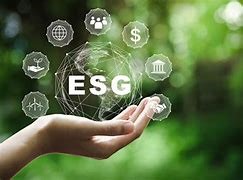
GPT Embracing Sustainability in Project Management: A Green Revolution

Embracing Sustainability in Project Management: A Green Revolution

As an experienced project manager, I've witnessed a significant shift in our field toward sustainability and green practices. It's not just about delivering projects on time and within budget anymore; it's about doing so in a way that respects and preserves our environment. This evolution aligns with the broader corporate responsibility towards environmental conservation and is increasingly becoming a non-negotiable part of project methodologies in progressive organizations.

Why Sustainability in Project Management?

The move toward green project management is driven by the need to reduce environmental footprints and improve societal outcomes. This involves integrating eco-friendly practices at every phase of the project lifecycle, from planning and execution to closure, and focusing on sustainability goals as much as financial and operational targets.

Key Aspects of Green Project Management

  1. Eco-friendly Practices: This includes using sustainable materials, reducing energy consumption, and minimizing waste. Project managers can lead the charge by opting for digital over physical resources, encouraging the use of renewable energy, and implementing recycling practices at all levels of the project.

  2. Waste Reduction: A core component of green project management is waste minimization. This can be achieved through careful planning, resource optimization, and by adopting lean management techniques that not only streamline processes but also reduce the environmental impact.

  3. Compliance with Green Standards: Ensuring that projects comply with environmental regulations and standards is crucial. This may involve aligning project goals with global standards like ISO 14000 on environmental management, and integrating Environmental Impact Assessments (EIAs) into project planning. The Green Project Management (GPM) organization further emphasizes the importance of aligning project outcomes with principles of sustainability, providing resources and certifications to help project managers implement these practices effectively (GreenProjectManagement.org).

Benefits of Green Project Management

The benefits of adopting a green approach are manifold. Not only does it enhance the sustainability of project outcomes, but it also boosts company reputation, aligns with investor expectations on corporate social responsibility (CSR), and often results in cost savings from efficient resource use. Moreover, it engages stakeholders who are increasingly environmentally conscious and demands transparent and responsible business practices.

Challenges and How to Overcome Them

Despite the clear benefits, the transition to green project management is not without its challenges. These include higher initial costs, resistance to change, and the complexity of integrating new practices into established methodologies. Overcoming these obstacles requires strong leadership, ongoing education and training, and the willingness to invest in long-term benefits over short-term gains.

The Role of Technology and Innovation

Technological advancements are facilitating this shift. Tools and platforms that offer better data management, project tracking, and resource allocation are making it easier to implement sustainable practices. For instance, project management software that integrates sustainability metrics can help track the environmental impact of a project in real time.

Looking Ahead

As project managers, our role is evolving. It’s no longer just about managing timelines and budgets; it’s about leading projects that contribute positively to the world. The Project Management Institute (PMI) continues to provide valuable resources and insights on this transition, which can be explored further on their website at PMI.org.

By embracing green project management, we not only contribute to the sustainability of our projects but also to the broader goal of environmental conservation. Let's lead by example and make sustainability a core part of our project management practices. Together, we can make a difference.

Adopting Agile? Don't Say It's Common Sense

 - June 12, 2017

In my courses, I use various activities to examine and drive home agile’s many principles. Ones that usually trigger deep conversations include getting to “done,” feedback, collaboration, and effectiveness before efficiency. Many senior managers attend my courses, and almost every time, one of them will ask: “Aren’t these principles just a common-sense way to work?”

I often hear the sentiment applied to popular agile practices, too. For instance, doesn’t it make sense to demo finished work to stakeholders? Meet your teammates every day for micro-planning? Capture work items from the perspective of the customer and process them in descending order of value?

If all this is indeed common sense, why has much of the world of work—at least the work of software development—operated differently in the last several decades? In fact, why hasn’t the new “sensible” approach displaced the previous approach completely?

Why Every Project Manager Should Be PMP-Certified

The most successful organizations are now focused on developing their employees’ leadership, negotiation, and conflict resolution skills — alongside traditional IT and technical skills. Businesses are increasingly realising the benefits of qualified project managers. This is a massive opportunity for professionals if they can prove their skills through certification and continuous learning.

In the United States, one credential stands out amongst the crowd: the Project Management Professional (PMP) certification offered by the Project Management Institute (PMI). More than 710,000 professionals have achieved this certification — which is aimed at experienced project managers — and PMP holders can be found leading projects in nearly every country.

Every project management professional, regardless of experience, should aim to achieve this globally recognized certification.

You can find some of the reasons why by reading the rest of the article at GoCertify.com here.

Why get the PMP?

The Project Management Professional (PMP)® is the most important industry-recognized certification for project managers. You can find PMPs leading projects in nearly every country and, unlike other certifications that focus on a particular geography or domain, the PMP® is truly global. As a PMP, you can work in virtually any industry, with any methodology and in any location.

The PMP also increases your earning potential. PMP certification holders earn 20 percent more than their non-certified peers, according to Earning Power: Project Management Salary Survey—Ninth Edition.

Employers benefit as well. When more than one-third of their project managers are PMP-certified, organizations complete more of their projects on time, on budget and meeting original goals. (Pulse of the Profession® study, PMI, 2015.)

The PMP signifies that you speak and understand the global language of project management and connects you to a community of professionals, organizations and experts worldwide. Become a PMP and become a project hero.

Let PMICIE help you obtain your PMP certification, register for our May 12th PMP exam prep workshop by clicking HERE.  Validate your experience and set yourself apart!

Increase your earning power with PMP and CSM certification!

No matter what services or products a business offers, its projects must be efficiently developed and delivered on time and within budget. Individuals who can cost effectively shepherd a project from inception to completion are in great demand in today's workplace.

More than ever, today's managers are asked to do more with less. Resources are scarce, deadlines are short and budgets have never been tighter. In this environment successful management of a project from beginning to end is difficult. It requires careful planning and the application of insightful strategies and cutting-edge concepts.

In today's challenging business environment, a company may fail if it can't develop and deliver competitive products or services on time. Certification will give you the skills and confidence to bring new products and services to market on time and on budget. The education you will receive through PMICIE’s PMP Exam Prep and Certified Scrum Master workshops will make you a more valued contributor to your organization and help your career advance.

Completing one of the certification workshops offered by PMICIE provides you a wide range of important benefits. The strategies and knowledge gained in the workshops will prepare you to pass the certification exams on the first try and obtain your certification designation.  Designations following your name demonstrates to current and potential employers that you possess a solid foundation of experience and education in project management that can have a positive impact on bottom-line results.  Project management certification is so important today that many organizations require their employees be certified in order to retain their positions.

Project Management Professional (PMP)®

The PMP® credential recognizes demonstrated knowledge and skill in leading and directing project teams and in delivering project results within the constraints of schedule, budget and resources. Certified Project Management Professionals are part of a successful group of practitioners who pursue this level of certification to enrich and advance their professional careers. Increasingly, many corporations require the credential for personal advancement within the organization or for initial employment.

Certified Associate of Project Management (CAPM)®

The CAPM® credential recognizes a demonstrated understanding of the fundamental knowledge, processes and terminology as defined in A Guide to the Project Management Body of Knowledge (PMBOK® Guide) that are needed for effective project management performance. If you’re a less experienced project practitioner looking to demonstrate your commitment to project management, improve your ability to manage larger projects and earn additional responsibility, and stand out to potential employers, the CAPM certification is right for you.

Certified Scrum Master (CSM)®

A Certified ScrumMaster® helps project teams properly use Scrum, increasing the likelihood of the project's overall success. CSMs understand Scrum values, practices, and applications and provide a level of knowledge and expertise above and beyond that of typical project managers. CSMs act as "servant leaders," helping the rest of the Scrum team work together and learn the Scrum framework. CSMs also protect the team from both internal and external distractions.